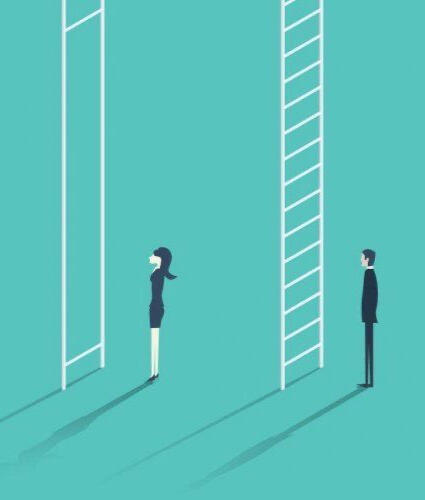
GENDER INEQUALITY
Gender inequality is when one sex or gender is consistently privileged or prioritized over another due to discrimination based on sex or gender. Gender equality is a fundamental human right, and discrimination based on gender is a violation of that right.
According to the World Economic Forum's Global Gender Gap Report 2020, the Philippines maintains Asia's top country in terms of bridging the gender gap. The Philippines has closed 78 percent of its total gender gap, earning a score of 0.781 in the report (down by 1.8 percentage points from .799 in 2019)
10 CAUSES OF GENDER INEQUALITY
The globe has come closer to achieving gender equality over time. In many parts of the world, women are better represented in politics, have greater economic possibilities, and have access to better healthcare. However, the World Economic Forum believes that full gender equality will take another century to achieve. What is it that causes the gender divide? The following are ten reasons for gender inequality:
1. UNEVEN ACCESS TO EDUCATION
Women still have fewer access to education than men around the world. 14 percent of young women aged 15 to 24 will not complete primary school. This category accounts for 58 percent of those who do not complete their basic education. Women account for 23% of the world's illiterates. When girls are not educated to the same level as boys, it has a significant impact on their future prospects and chances.
2. LACK OF EMPLOYMENT EQUALITY
Only six countries in the world grant women the same legal rights as men in the workplace. In truth, most economies only provide women 34% of men's rights. According to studies, leveling the playing field in the workplace has a favorable domino impact on other areas prone to gender disparity.
3. JOB SEGREGATION
The division of labor is one of the factors that contribute to gender inequality in the workplace. In most countries, there is an underlying idea that men are more prepared to perform specific tasks than women. Those are, for the most part, the highest-paying positions. Women's income is lowered as a result of this prejudice. Women also bear the brunt of unpaid labor, so they do extra work that goes unnoticed financially even when they work full-time.
4. LACK OF LEGAL PROTECTION
According to World Bank study, nearly one billion women are not legally protected from domestic sexual abuse or domestic economic violence. Both have a big impact on women's ability to prosper and live their lives freely. There are also few legal rights against harassment in the job, in school, and in public in many nations. Without protection, these settings become dangerous, and women are forced to make decisions that compromise and limit their ambitions.
5. LACK OF BODILY AUTONOMY
Many women around the world lack control over their own bodies, especially when they become mothers. Birth contraception is frequently difficult to obtain. Over 200 million women who do not want to become pregnant do not use contraception, according to the World Health Organization. A lack of options, limited access, and cultural/religious hostility are some of the reasons for this. On a global scale, roughly 40% of pregnancies are unintended, and while 50% of these result in abortion, the remaining 38% result in births. These women frequently become financially reliant on another individual or the government, giving up their independence.
6. POOR MEDICAL CARE
Women also receive lower-quality medical treatment than men, in addition to having limited access to contraceptives. This is linked to other factors that contribute to gender inequality, such as a lack of education and work possibilities, which causes more women to be poor. They have a lower likelihood of being able to afford quality healthcare. Affecting women more than males, such as autoimmune disorders and chronic pain issues, there has also been less research. Many women also face prejudice and rejection from their doctors, widening the disparity in healthcare quality between men and women.
7. LACK OF RELIGIOUS FREEDOM
Women are the ones who suffer the most when religious freedom is violated. When radical beliefs (such as ISIS) enter a community and restrict religious freedom, gender inequality worsens, according to the World Economic Forum. Religious intolerance was also linked to women's ability to participate in the economy in a study conducted by Georgetown University and Brigham Young University. Women's participation makes an economy more stable when there is more religious freedom.
8. LACK OF POLITICAL REPRESENTATION
Only 24.3 percent of seats in all national legislatures were filled by women at the start of 2019. As of June 2019, there were 11 female heads of state. Despite years of improvement, women continue to be chronically underrepresented in government and the political process. As a result, topics raised by female lawmakers, such as maternity leave and childcare, pensions, gender equality laws, and gender-based violence, are frequently overlooked.
9. RACISM
It is hard to discuss gender inequality without mentioning racism. It has an impact on what jobs women of color can attain and how much they are paid, as well as how legal and healthcare institutions see them. For a long time, racism and gender inequality have been intertwined. According to scholar and historian Sally Kitch, European settlers in Virginia chose what work might be charged based on the race of the woman doing the work. Work conducted by African women was considered "labor," and so taxed, whereas work performed by English women was considered "domestic," and thus not taxable. Pay disparities between white and non-white women perpetuate prejudice and contribute to gender inequality.
10. SOCIAL MINDSETS
The overall mindset of a society has a huge impact on gender disparity. It's less concrete than some of the other elements on this list. In every field, whether it's employment, the legal system, or healthcare, how society evaluates the distinctions and value of men vs. women plays a key role. Gender beliefs go deep, and despite the fact that progress can be accomplished through laws and structural changes, there is often opposition after substantial improvements. When there is progress, such as improved representation for women in leadership, it is also usual for everyone (men and women) to overlook other issues of gender inequity. Gender inequality is exacerbated by these mindsets, which delay meaningful change.